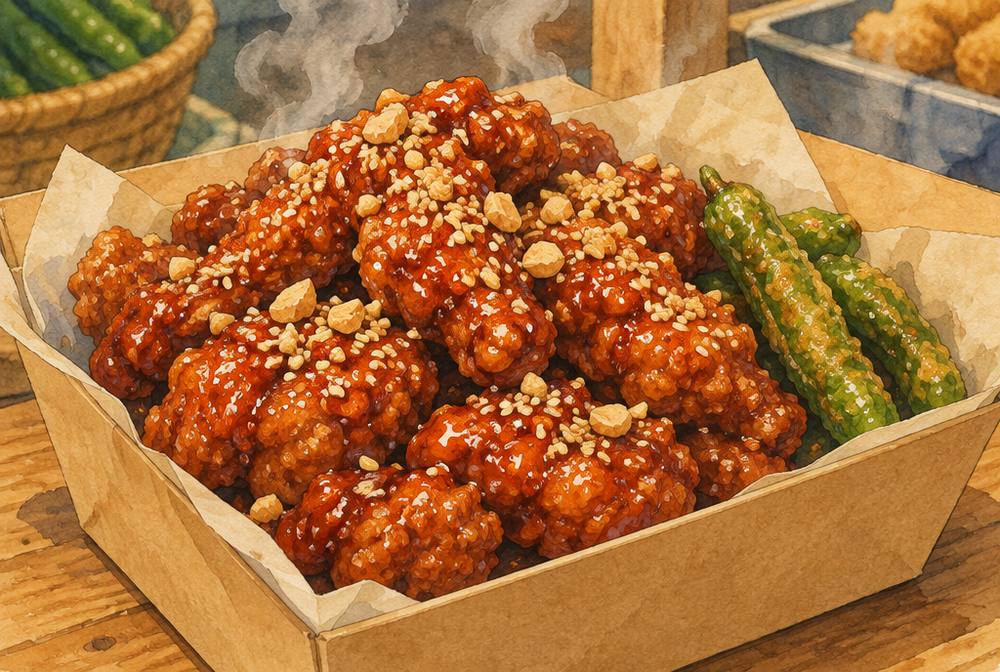
Sokcho's signature snack: fried chicken tossed in a syrup and gochujang (chili paste) glaze, crispy outside and juicy inside. Dakgangjeong shops, from decades-old establishments to newcomers, cluster in a single alley, giving rise to the name "Sokcho dakgangjeong."
It stays crisp even when cold, so many people buy it to take away or ship. Asking for half mild and half spicy is a common order.
Sokcho local cuisine Sundae Alley
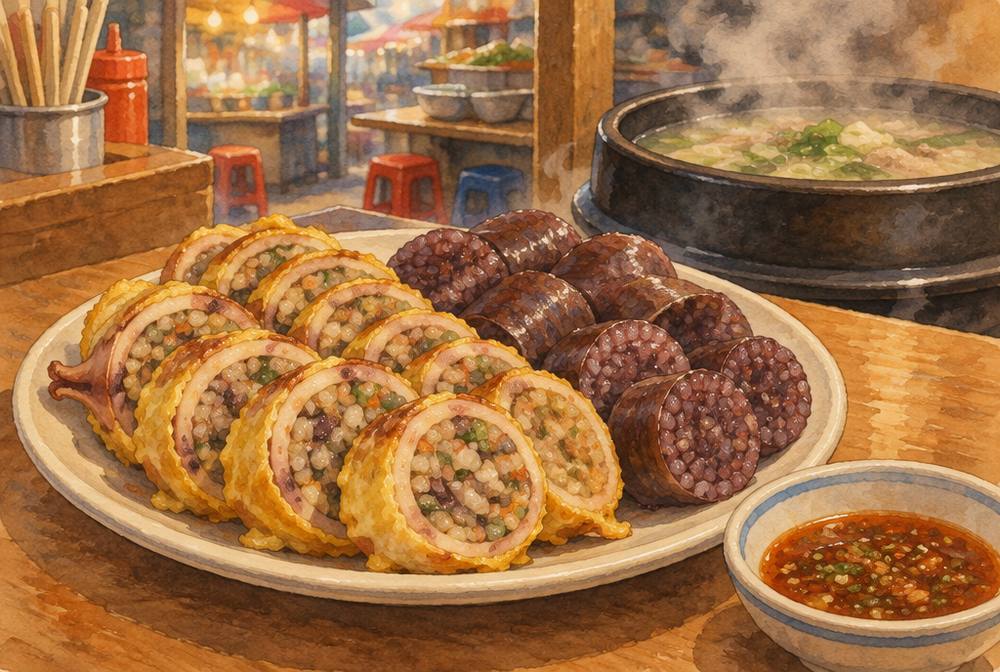
Squid sundae (stuffed squid)
Cleaned squid bodies are packed tightly with a filling of vegetables, tofu and glutinous rice, steamed, then sliced, dipped in egg and pan-fried. The dish came from the everyday cooking of east coast port towns where squid was once plentiful.
Many shops let you choose between pan-fried and plain steamed. If it's your first time, the egg-battered version is easier to eat.
Tastes of the displaced Sundae Alley
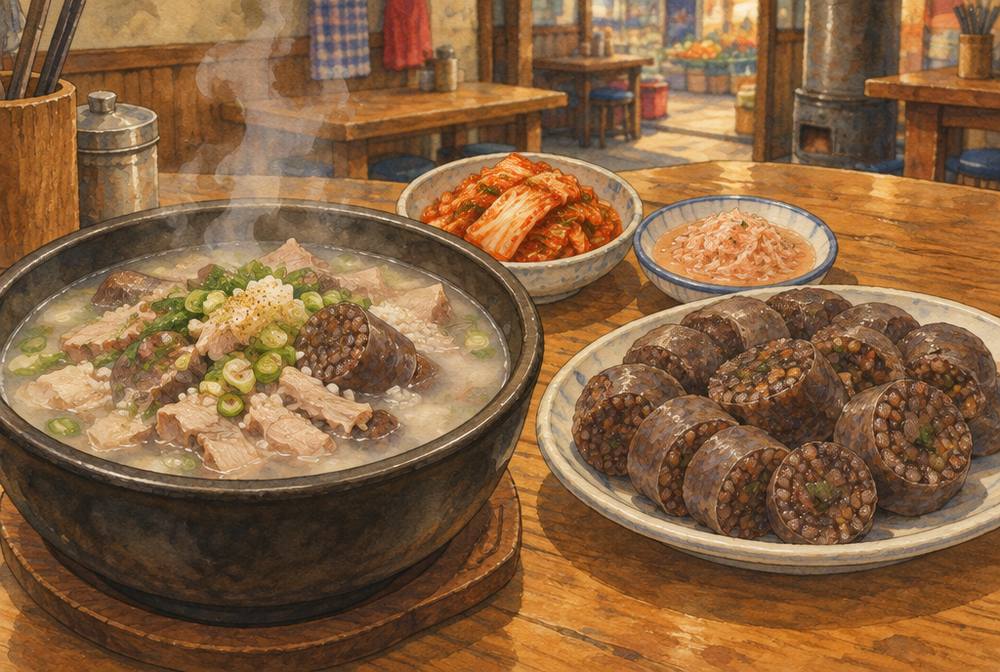
Abai sundae (North Korean-style sausage)
A sundae (Korean sausage) made the hometown way by displaced people from Hamgyeong Province who came south during the Korean War; pork large intestine is generously stuffed with glutinous rice, blood and vegetables, making it thick. Together with Abai Village in Cheongho-dong, it has become a symbol of Sokcho.
A bowl of sundae-gukbap (sausage soup with rice) with a plate of Abai sundae makes a hearty meal.
Straight from the East Sea B1 raw fish center
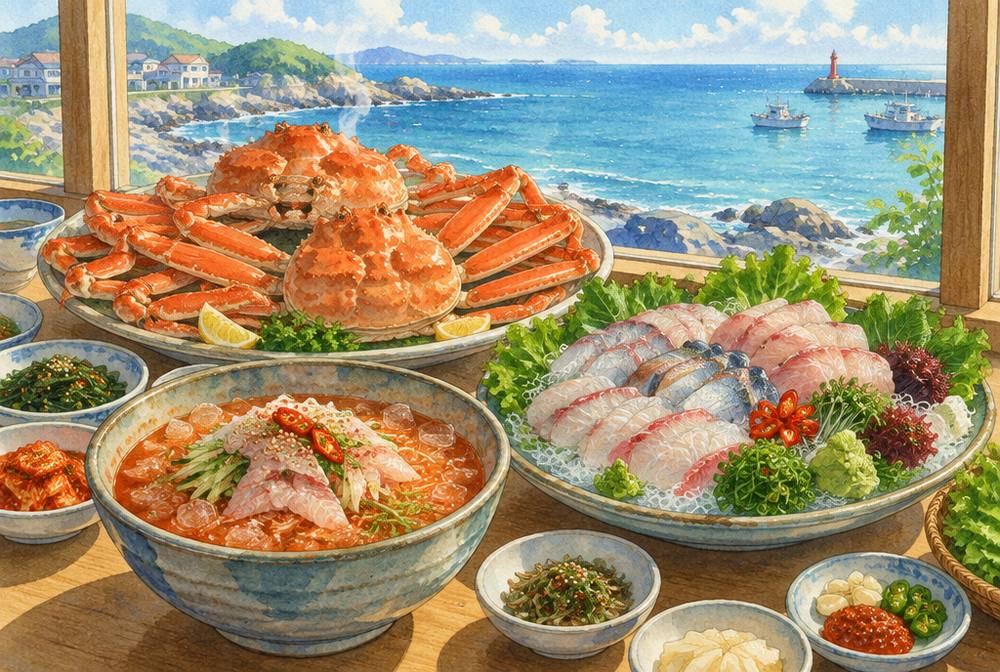
Fresh raw fish (hoe) · Mulhoe (cold raw fish soup)
At the basement raw fish center, pick a fish from the tanks of the day's catch and have it sliced into hoe on the spot. On the East Coast, mulhoe — shredded raw fish in a cold, seasoned broth — is also a summer favorite.
Prices depend on the type of fish and weight, so ask the price first, then say whether you want it packed after preparation or will eat there.
Ad
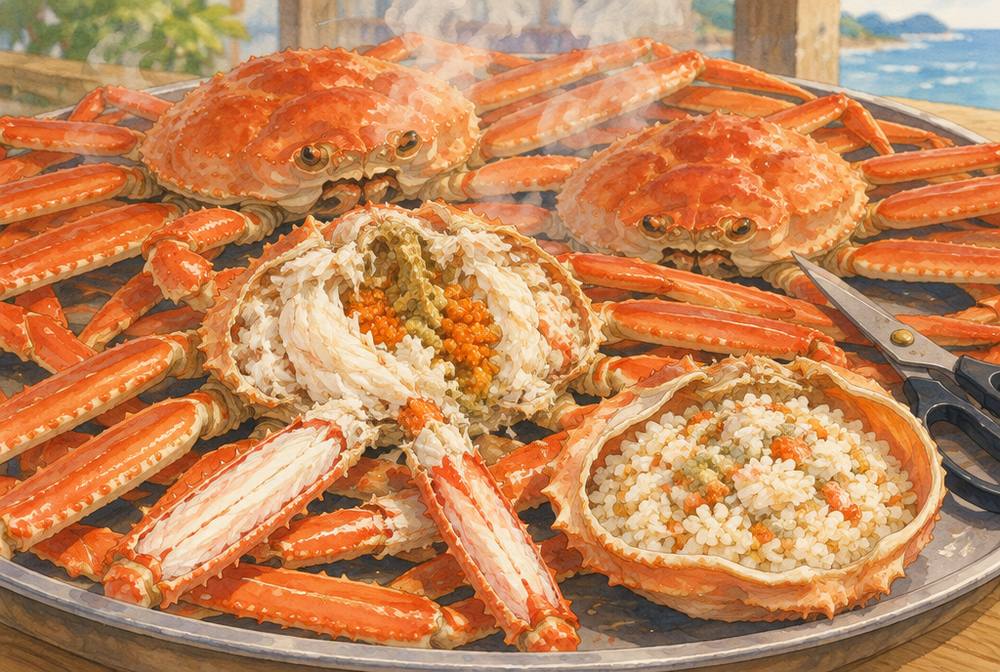
Steamed crustaceans Seafood Shops
Snow crab · red snow crab · king crab
Another delicacy that comes to mind when you think of Sokcho. Many shops will steam the crab you choose and prepare it for easy eating, and they also handle imports such as Russian king crab.
Snow crab is considered in season from winter to spring. Check the labels for origin (local or imported).
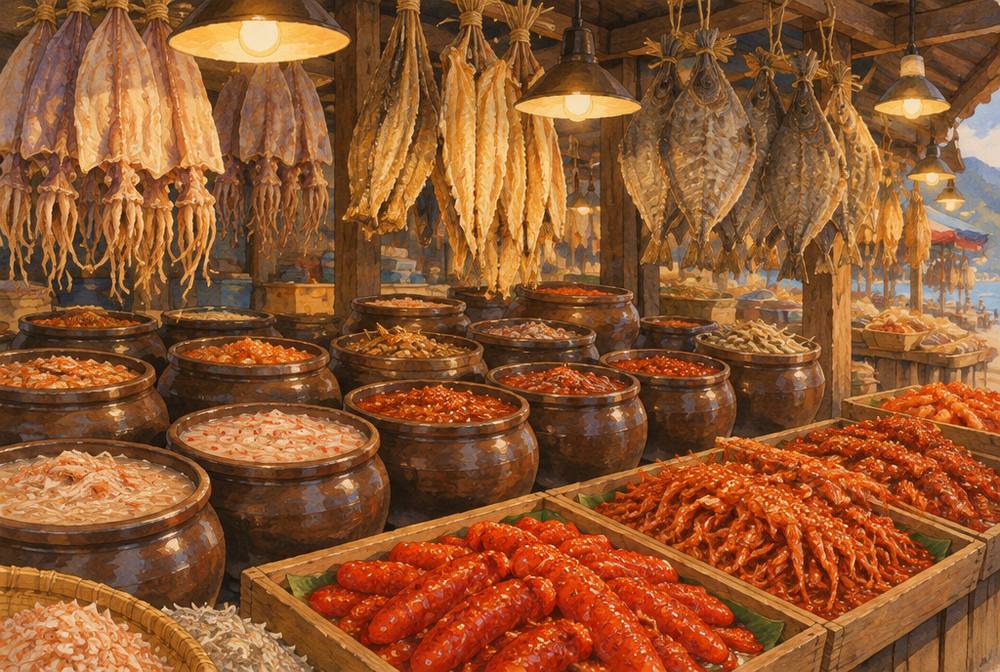
Gifts that go great with rice B1 · Jeotgal Alley
jeotgal (salted seafood)
Known for seasoned jeotgal (salted seafood) made from East Sea catches such as pollock and squid. You can taste jar-aged jeotgal and buy it directly from the vendors.
If you're curious about Sokcho's seasoned jeotgal (salted seafood) culture, also stop by the Jeotgal Museum (see the Attractions menu).
Local specialties to pick up B1 dried seafood shops
Semi-dried squid, air-dried in the sea breeze until chewy, turns tender and chewy when grilled. Many shops also sell long-keeping dried seafood such as filefish jerky, hwangtae (dried pollock) and kelp in small packs.
Semi-dried squid keeps a long time if stored in the freezer.
Home-style side dishes Seafood · Dried Seafood Shops
Semi-dried fish · Grilled fish
Lightly dried fish such as flounder and Atka mackerel are less fishy and pleasantly chewy, making them great for grilling. Some restaurants in the market will grill them for you on the spot.
If taking food to go, ask first whether they can pack it in an ice box.
Kodari-gangjeong, half-dried pollock (kodari) fried and tossed in a sweet sauce, is one of the most popular snacks at Sokcho's markets these days, along with dakgangjeong. Laver and kelp bugak (crisps) and all kinds of twigim (fritters) are sold too.
Lighter than dakgangjeong, it is a popular snack for kids and goes well with beer.
Trending snacks 1F food stalls
Pollock chicken
A new dish of pollock fried like chicken. Though it is fish, it has little fishy taste and tender flesh, so most people enjoy it.
It is best freshly fried, so enjoy it right away while exploring the market.
Raw fish center · Food alley
Many shops are gathered here, so it's easy to pick and choose what to eat.